The Background
Adeptia’s core product is a B2B SaaS data integration platform designed to simplify how enterprises onboard and integrate partner data. Over its 25+ year history, functionality was added incrementally, without consistent UX consideration. This led to:
- A fragmented, unintuitive interface
- Lack of cohesion across components and screens (no centralized design system)
- Onboarding processes that often took months due to steep learning curves
After a (brand refresh), the mismatch between the modernized brand and the outdated product UI created further friction for both customers and Adeptia's internal teams.
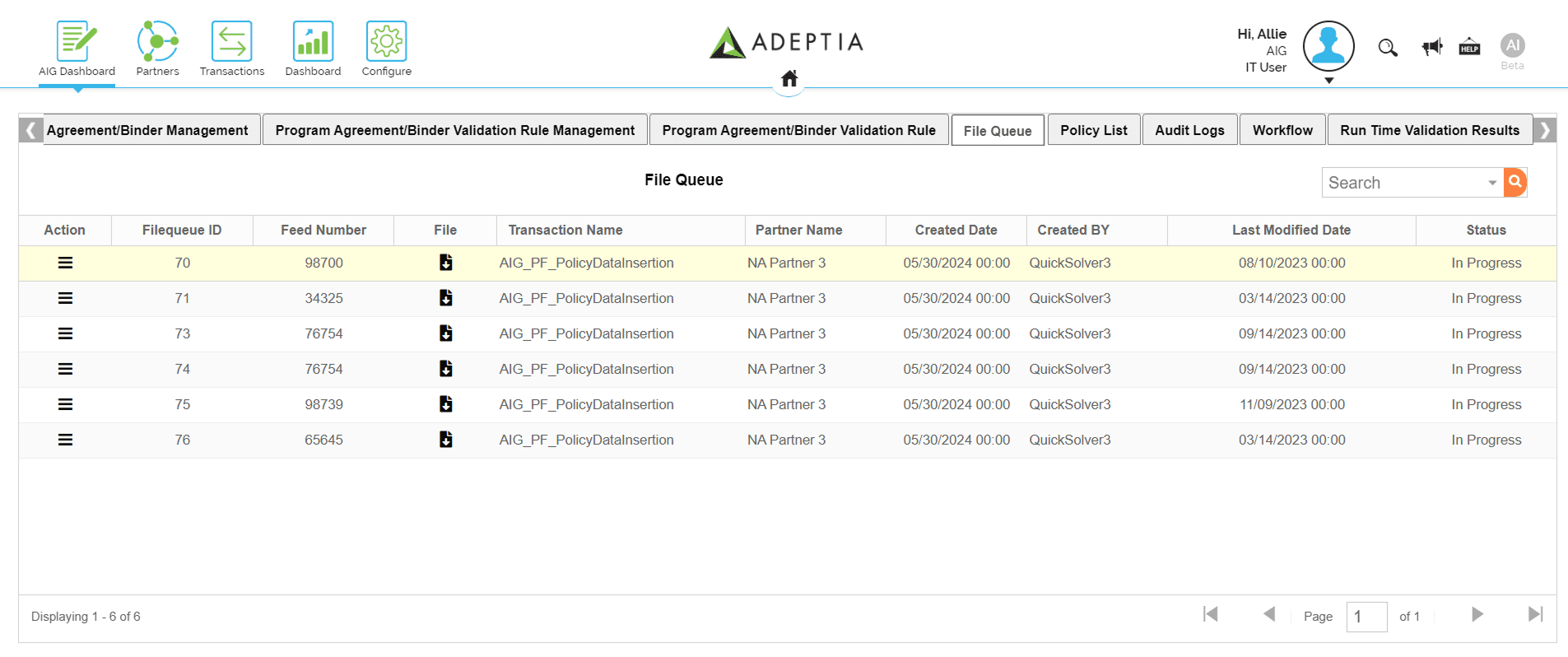
The interface of Adeptia's core product prior to the redesign.
The Problem
- Fragmented UX: Features were added piecemeal, creating inconsistent navigation and workflows
- Brand misalignment: New company branding highlighted how dated the product interface felt
- No design system: Each new feature carried its own design “flavor,” fragmenting cohesion and slowing development
Main Goals
- Phase 1 Create an updated design system to address issues of design fragmentation and brand misalignment. Remap the navigation to a more easily navigable layout for users.
- Phase 2 Conduct user research within the company and with clients to determine largest pain points in the product, and design and develop solutions.
My Role
As Adeptia’s in-house product designer, I partnered with an external product design/engineering agency. The agency team included another product designer, a UX researcher, and frontend engineers.
My contributions included:
- Design System Creation: Co-built Adeptia’s first unified design system from the ground up (color tokens, typography, grid system, buttons, navigation, modals, drawers, form elements)
- Product Redesign: Redesigned key product flows, applying consistency and quick-win UX enhancements (e.g., hover states, microinteractions, progressive disclosure with drawers/modals)
- Collaboration: Acted as the bridge between agency partners and Adeptia’s internal product/engineering team, ensuring alignment and translating design updates into actionable development tasks
- Research Participation: Sat in on early user research sessions (Phase 2) to surface customer pain points and map opportunities for improvement
The Process
Phase 1: Design System Development
With a tight timeline and limited scope, the focus was on high-impact, surface-level improvements that would establish a foundation for future UX redesigns.
- We started with design tokens (color, typography, spacing) and built up to reusable componentry (buttons, nav, modals, drawers)
- The process was designed to increase workflow efficiency between the design and development team; a common design library meant engineers could implement designs in parallel
- Applied quick usability fixes, such as standardizing primary/secondary fixes, improved feedback through hover states and transforms, reduced page reloads with drawer/popup continuity
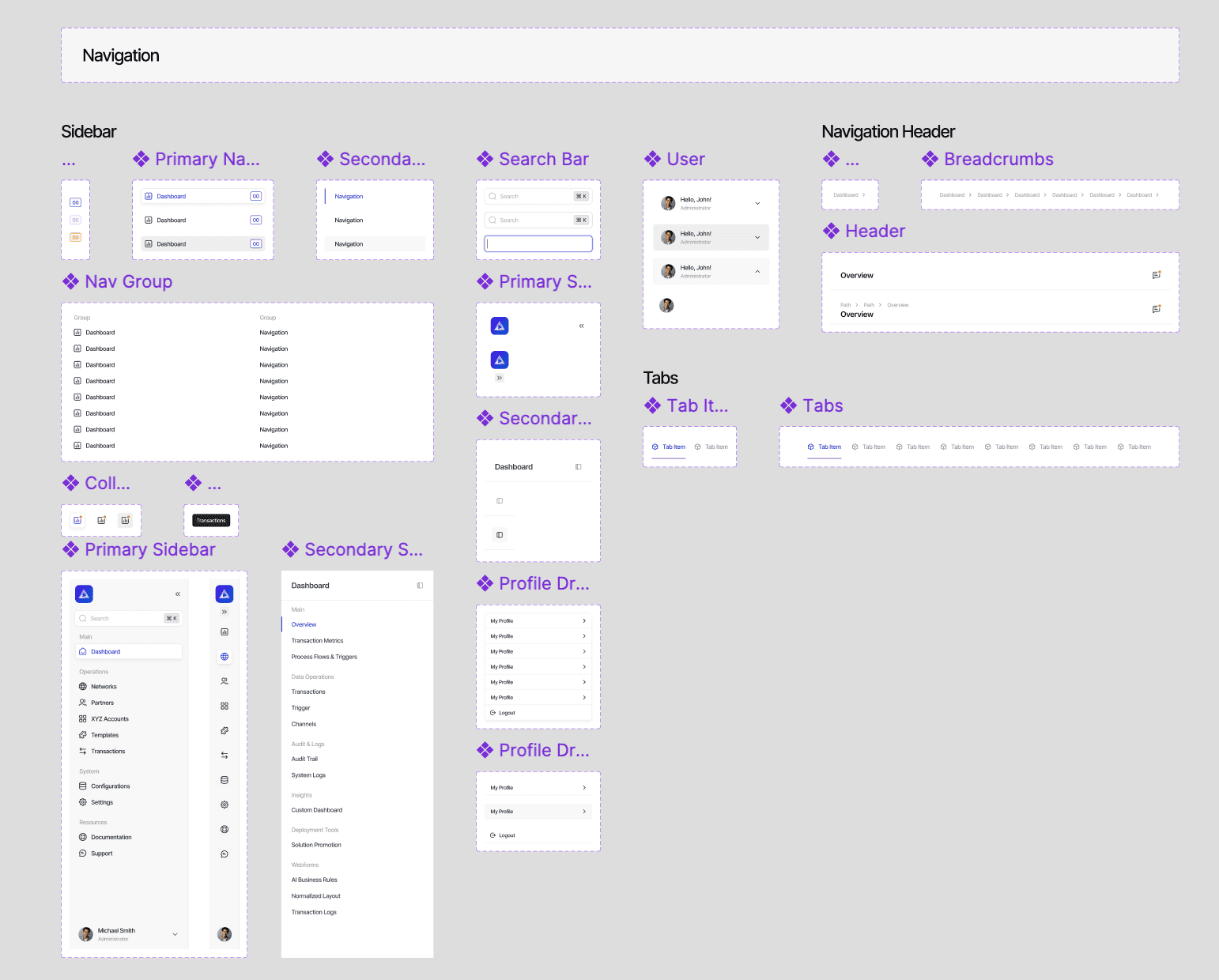
Nav components created as part of the new design system.
Phase 2: Research & Redesign (In Progress)
- Collaborated with UX researcher to conduct stakeholder and client interviews
- Synthesized early findings into recurring themes (e.g., onboarding bottlenecks, navigation discoverability)
- Beginning hypothesis generation for redesigning complex workflows
- Paired insights with technical feasibility discussions to prioritize next design sprints
Tools
The primary design tool used was Figma.
Outcome and Impact
Phase 1
- Created Adeptia's first design system, bringing greater efficiency to development sprints and a more cohesive product experience
- Delivered a modernized UI aligned with refreshed brand identity
- Improved information density and navigation hierarchy across key user flows
- Early feedback from within the company and key clients included: "navigation feels more intuititive" and "it looks like a modern product now"
Phase 2
- Surfacing user insights to guide greater overhauls to core product flows
- Improve company/client relationships through user research sessions because clients feel their opinion is heard and valued
Reflection and Takeaways
In this product design role, working alongside the design agency, I was fascinated by the role contractors can play in redesigning a client’s core product. Without the historical context of the product team the agency approached the work with a fresh perspective. At the same time, the historical context creates a set of complexities that were better understood by myself as the in-house designer.
This experience highlighted the importance of my role as an in-house designer. I acted as the bridge between the agency’s new perspectives and Adeptia’s internal product and engineering teams, keeping the scope feasible with our technical resources and existing baggage. The collaboration reinforced how impactful it can be to combine external innovation with internal knowledge, and it deepened my appreciation for design’s role in navigating between those two worlds.